
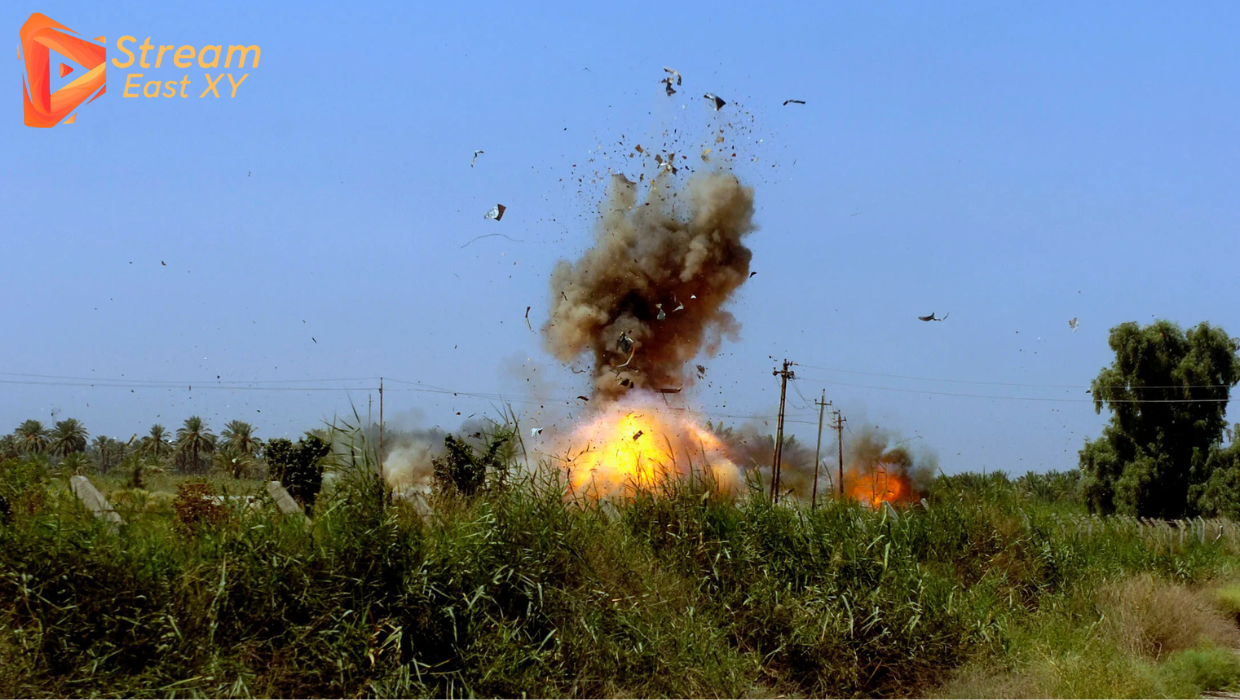

The phrase efp bomb often appears in news reports, military discussions, and global security analysis. However, many readers still struggle to understand what it truly means and why it continues to be relevant today. An efp bomb is not a normal explosive. It is a highly specialised weapon designed to penetrate armoured targets using focused force rather than a wide blast.
This article explains the topic clearly and responsibly. You will discover how Explosively Formed Penetrator technology works, why it is different from conventional explosives, and how it has changed modern conflict. You will also learn about its historical use, real-world impact, and how defence forces attempt to counter this threat.
If you want a deep, easy-to-read explanation that goes beyond surface-level information, this guide delivers exactly that. The goal is clarity, credibility, and usefulness—not technical overload or fear-driven language.
What an EFP Bomb Really Is
An efp bomb is a type of improvised explosive device engineered to defeat heavy armour. Instead of relying on shockwaves, it transforms explosive energy into a high-speed metal projectile.
This projectile is formed using a curved metal plate, often copper. When the device detonates, the metal reshapes and shoots forward at extreme speed. This allows it to pierce steel and reinforced vehicle armour.
Key characteristics include:
- Precision-based damage
- High penetration power
- Compact size
- Focused kinetic force
Because of this design, armoured military vehicles are the primary targets rather than open areas.
How Explosively Formed Penetrators Work
The effectiveness of Explosively Formed Penetrators comes from physics rather than explosive size. Timing, shape, and materials all matter.
The explosive charge collapses the metal liner inward. This action reshapes the metal into a solid slug or rod. That projectile then travels forward at hypersonic speed.
Here is a simple breakdown:
- Detonation begins
- Metal liner reshapes
- Projectile forms instantly
- Armour is penetrated on impact
| Component | Purpose |
| Metal liner | Forms penetrator |
| Explosive charge | Creates force |
| Detonator | Controls timing |
| Casing | Directs energy |
This process makes the efp bomb extremely dangerous despite its relatively small size.
Why EFP Bombs Are Considered Highly Dangerous
The danger of an efp bomb is not its blast radius. It is the precision and lethality of the strike.
Even modern military vehicles designed for combat survivability can be disabled by a single well-placed attack. The projectile can penetrate armour and cause catastrophic internal damage.
Major risk factors include:
- Minimal warning time
- High armour penetration capability
- Targeted lethality
- Difficult early detection
Military analysts often rank EFP attacks among the most serious vehicle-borne threats in conflict zones.
Historical Use in Modern Conflicts

The global spotlight on the efp bomb grew during early 21st-century warfare. These devices appeared in conflicts where smaller groups faced technologically advanced forces.
They were used primarily along patrol routes and convoy paths. Their effectiveness forced changes in military tactics and vehicle design.
Historical impact includes:
- Increased investment in counter-IED technology
- Redesign of armoured vehicles
- New patrol and route-clearance methods
- Improved training for explosive threat detection
This shift marked a turning point in asymmetric warfare strategy.
Difference Between EFP Bombs and Traditional IEDs
Although often grouped together, efp bombs differ significantly from standard roadside explosives.
Traditional IEDs rely on blast pressure. EFP devices rely on penetration.
| Feature | Traditional IED | EFP Bomb |
| Damage type | Blast force | Metal penetrator |
| Targeting | Area-based | Precision-based |
| Armour defeat | Limited | Extremely high |
| Construction | Simple | Highly engineered |
This distinction explains why defence experts treat Explosively Formed Penetrators as a separate and more advanced threat.
Defensive Measures and Counter Technologies
Modern defence forces use multiple strategies to reduce the impact of efp bomb attacks. No single solution is perfect, so layered protection is essential.
Common countermeasures include:
- Reactive armour panels
- Vehicle spacing tactics
- Electronic jamming systems
- Route surveillance technology
Advances in threat detection systems continue to improve response times, but adaptation remains a constant challenge.
Role in Asymmetric Warfare
The efp bomb plays a major role in conflicts where one side lacks access to advanced weapon systems.
Its appeal comes from:
- Low production cost
- High tactical effectiveness
- Psychological impact
- Ability to challenge superior forces
Experts note that EFP technology reflects innovation driven by necessity rather than resources.
Ethical and Legal Considerations
The use of EFP weapons raises serious ethical questions. While they are designed for military targets, misuse can cause severe civilian harm.
Key concerns include:
- Compliance with international humanitarian law
- Protection of non-combatants
- Accountability for weapon use
- Regulation of explosive materials
These issues remain central to global security discussions.
Future Developments and Threat Outlook
Experts believe Explosively Formed Penetrator devices will continue evolving alongside material science and surveillance technology.
Future trends may include:
- Improved stealth construction
- Smarter detonation systems
- Advanced armour solutions
- AI-assisted detection tools
Understanding these developments helps policymakers and security analysts prepare for future risks.
FAQs
What does EFP stand for?
It means Explosively Formed Penetrator.
Are EFP bombs illegal?
Legality depends on use and compliance with international law.
Can armour fully stop an EFP device?
Modern armour reduces damage but cannot guarantee protection.
Are EFPs the same as shaped charges?
They are related but use different penetration mechanics.
Why are EFP bombs hard to detect?
They produce limited explosive signatures before detonation.
Conclusion
The efp bomb represents a shift in how modern threats are designed and deployed. It combines science, strategy, and precision in ways that continue to challenge global security.
Understanding this topic helps readers see the bigger picture of modern conflict and defence. Stay informed, ask questions, and engage with reliable analysis to better understand the world around you.